A Quiet Boom Beneath the Surface
The demand for data centers in the Philippines is accelerating like never before. Once a niche infrastructure asset, data centers are now becoming foundational to our country’s digital economy — driven by cloud adoption, fintech growth, AI services, and the ever-expanding BPO sector.
Why the Philippines?
The Philippines is strategically located in the heart of Southeast Asia, making it an ideal location for regional connectivity. With over 70 million internet users and a robust digital economy, the need for resilient and scalable infrastructure is growing rapidly. The country’s booming BPO and IT sectors, supported by hundreds of IT parks and global service providers, further amplify demand for localized digital facilities.
Submarine cable landing points enhance international bandwidth and redundancy, reinforcing the country’s viability as a data hub. Government incentives offered by PEZA, BOI, and the DICT help developers by offering tax holidays, income tax exemptions, duty-free importation of capital equipment, and simplified permitting processes — making the Philippines an attractive location for data center development.
The push for decongesting Metro Manila has also led to increased infrastructure development in emerging provinces like Cavite, Laguna, Batangas, Bulacan, and Clark — providing alternative locations with strong utility access and less environmental risk. This shift supports operational resilience and scalability while aligning with decentralization efforts in urban planning.
What Makes Data Center Construction Different?
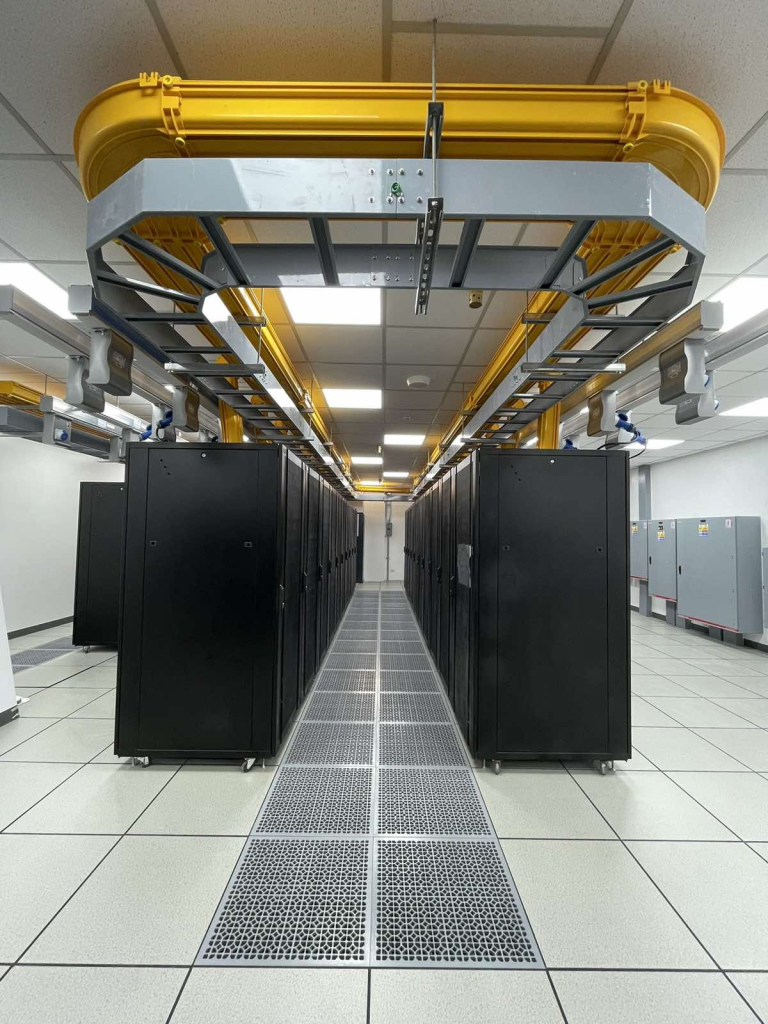
Data centers are mission-critical environments designed for non-stop operations. They must meet rigorous uptime standards, typically aligned with Uptime Institute Tier Certifications, to ensure round-the-clock availability. These facilities incorporate high-performance MEP systems, including precision cooling, dual power sources, UPS systems, and redundant fire suppression systems.
Security is another core requirement. Biometric access controls, CCTV networks, airlock entries, and three-tier security layers are standard. Structurally, data centers often include raised flooring, hot/cold aisle containment, and modular layouts to allow future scalability. International certifications like ISO, NFPA, and increasingly LEED are often required by global clients seeking high environmental and operational standards.
While LEED certification isn’t a strict requirement for all data centers, it is becoming more common particularly among hyperscale providers and multinational corporations as part of their ESG and sustainability commitments.
Key Construction Challenges
Power availability remains one of the most pressing concerns. These facilities require not just consistent grid power, but also robust redundancy through backup generators and battery systems. Site selection is equally critical, taking into account seismic activity, flooding risk, proximity to telco networks, and potential for future utility upgrades.
Climate control is another essential aspect. Managing thermal loads from server racks demands highly efficient HVAC systems, often leveraging chilled water systems or CRAC (Computer Room Air Conditioning) units. These cooling systems must run continuously and reliably, with energy efficiency factored into long-term operating costs.
The fast-tracked nature of data center builds adds pressure to deliver without compromising quality. Tight coordination between design, civil, MEP, and IT teams is necessary to ensure a smooth integration between infrastructure and technology. Any misalignment in schedule or specification can result in costly commissioning delays.
Other challenges include:
- Strict zoning and permitting requirements, especially in areas under PEZA or special economic zones
- Workforce availability, particularly of skilled labor for specialized systems installation
- Material sourcing, as certain equipment like UPS units and generators often require importation and lead time management
How ArkiNovus Supports the Industry
ArkiNovus provides Design-Build, EPCM, and Project Management services that align all stakeholders for successful execution. We maintain close collaboration with IT teams, MEP consultants, and vendors to ensure system compatibility, on-time turnover, and future-proof planning.
We also offer Technical Due Diligence to help clients assess the suitability of a site prior to acquisition — factoring in power access, regulatory risk, telco infrastructure, and more.
Our in-depth knowledge of PEZA processes, green building standards, and local codes gives clients confidence when expanding into Philippine territory. Through value engineering and lifecycle planning, we optimize spatial efficiency, energy usage, and operational reliability — without sacrificing performance.
Final Thought: Digital Infrastructure is the New Backbone
What power grids were to the 20th century, data centers are to the 21st. And as the Philippines positions itself as a regional digital hub, construction partners must rise to the occasion.
ArkiNovus is ready to build that future — one facility at a time.
Need help planning a data center project in the Philippines?
Schedule a free consultation today at arkinovus.com